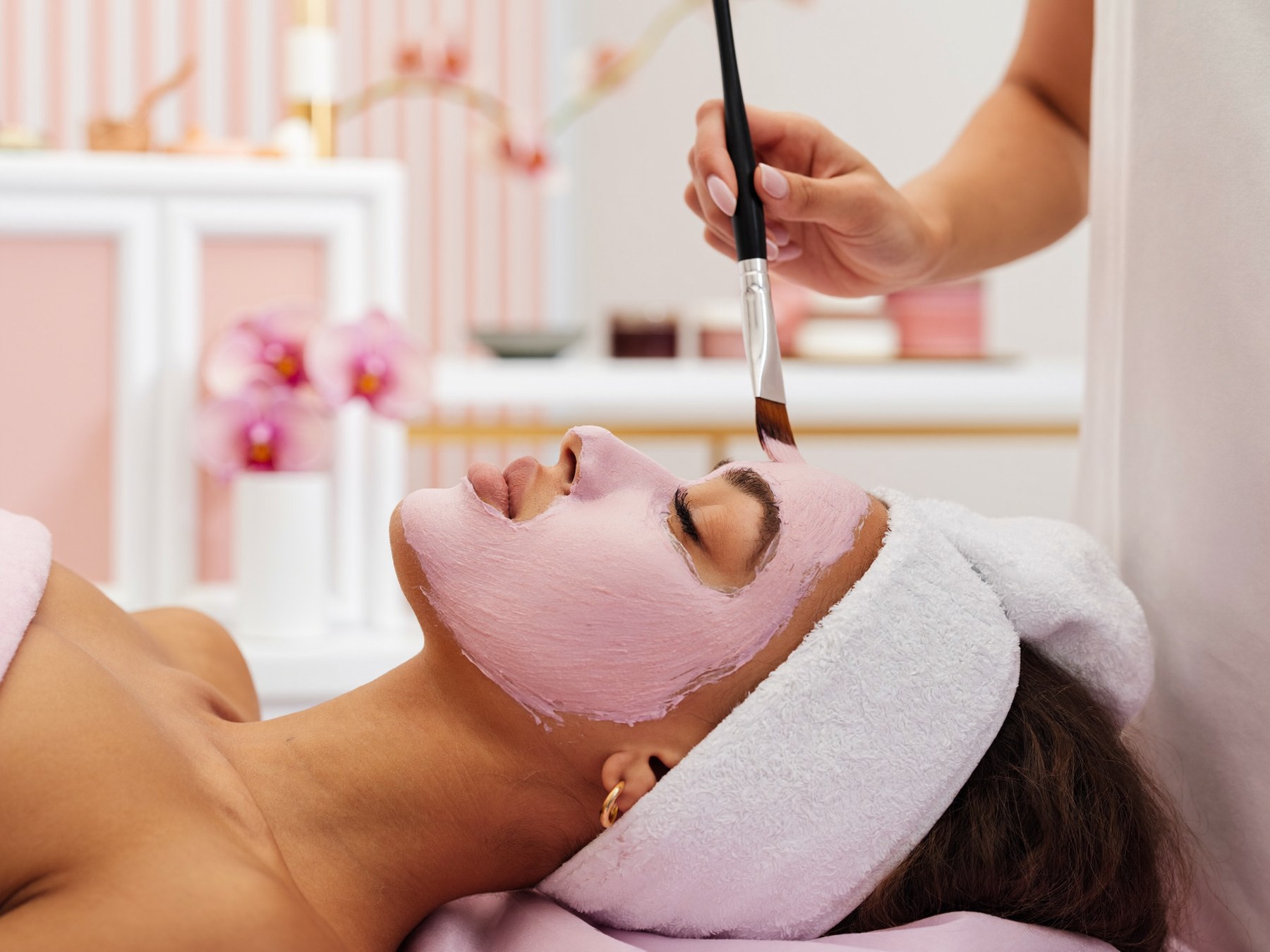
The Complete Guide to Chemical Peels
Chemical peels are one of the most effective, proven treatments available at a licensed med spa — and if you've been curious about what they actually do, whether they're safe for your skin, and what recovery really looks like, you're in the right place. This guide covers everything you need to know before booking a chemical peel treatment: the science behind how they work, the different types available, the real benefits you can expect, and how to know whether you're a good candidate. At [Blushvirginia](https://blushvirginia.com), our licensed team walks every client through this process personally — because the right peel for your skin is never a one-size-fits-all decision.
**✦ Key Takeaways**
- Light chemical peels require **zero to two days** of downtime; medium peels need **five to seven days**; deep peels can require **two weeks or more**
- Most clients need a **series of 3–6 light peels** spaced four weeks apart for optimal, lasting results
- TCA peels at **15–35% concentration** are clinically shown to treat melasma and post-inflammatory hyperpigmentation *(Journal of Clinical and Aesthetic Dermatology)*
- In **Virginia**, prescription-strength chemical peels must be performed by or under the direct supervision of a licensed physician, NP, or RN — a genuine safety reason to choose a licensed med spa
- The global chemical peel market is projected to surpass **$3.5 billion by 2030**, reflecting just how mainstream this treatment has become *(Grand View Research)*
---
## What Is a Chemical Peel and How Does It Work?
What Is a Chemical Peel and How Does It Work?
A chemical peel is a controlled skin-resurfacing treatment that uses an acid solution to remove the outer layers of damaged skin, revealing fresher, smoother, more even-toned skin underneath. Here's the simple science: your skin naturally sheds dead cells over time, but that process slows as you age — or gets disrupted by sun damage, acne, and hormonal changes. A chemical peel accelerates that turnover deliberately and precisely. The acid solution breaks down the bonds between dead and damaged skin cells, triggering your body's natural healing response. New collagen forms. Fresh skin cells rise to the surface. The result is visibly renewed skin with improved tone, texture, and clarity. The depth of that controlled exfoliation — how many layers are treated — depends entirely on the type of peel used, the acid concentration, and how long it's left on the skin. That's why having a licensed, trained provider select and apply your peel is so critical. It's not just about choosing a product off a menu. It's about reading your skin, understanding your goals, and applying clinical judgment.
📊 Did You Know?
The global chemical peel market is projected to surpass $3.5 billion by 2030 — driven by growing consumer demand for non-surgical skin rejuvenation that actually delivers results. (Grand View Research)
---
The global chemical peel market is projected to surpass $3.5 billion by 2030 — driven by growing consumer demand for non-surgical skin rejuvenation that actually delivers results. (Grand View Research)
Types of Chemical Peels: Light, Medium, and Deep
The three main types of chemical peels — light, medium, and deep — differ by how far they penetrate the skin, how much downtime they require, and which skin concerns they address best. ### Light (Superficial) PeelsLight (Superficial) Peels
Light peels use alpha hydroxy acids (AHAs) like glycolic or lactic acid, or beta hydroxy acids (BHAs) like salicylic acid, at concentrations typically ranging from **20% to 70%**. They work on the very outermost layer of skin — the epidermis — and are the most accessible option for most people. - **Best for:** Mild texture issues, dullness, early signs of aging, mild acne, uneven tone - **Downtime:** Zero to two days of mild flaking or pinkness - **Sessions needed:** A series of 3–6 treatments spaced four weeks apart for best results ### Medium PeelsMedium Peels
Medium peels most commonly use trichloroacetic acid (TCA) at concentrations between **15% and 35%**. They penetrate into the upper dermis — the deeper structural layer of skin — making them effective for more significant concerns. - **Best for:** Moderate sun damage, hyperpigmentation, melasma, acne scarring, fine lines - **Downtime:** Five to seven days of peeling, redness, and sensitivity - **Sessions needed:** Often one to two treatments for noticeable improvement ### Deep PeelsDeep Peels
Deep peels, typically using phenol, reach the lower dermis and produce the most dramatic results — but they come with the most significant recovery period and are not appropriate for all skin types. - **Best for:** Deep wrinkles, severe sun damage, significant scarring - **Downtime:** Two weeks or more; often requires sedation and medical monitoring - **Sessions needed:** Usually a single treatment; results can last years --- **Quick Comparison Table** | Peel Type | Acid Used | Penetration Depth | Downtime | Ideal For | |---|---|---|---|---| | Light | AHA / BHA | Epidermis | 0–2 days | Dullness, mild acne, texture | | Medium | TCA (15–35%) | Upper dermis | 5–7 days | Hyperpigmentation, scarring | | Deep | Phenol | Lower dermis | 2+ weeks | Deep wrinkles, severe damage | ---Key Benefits of Chemical Peels for Your Skin
Chemical peels deliver a wide range of skin benefits — and the specific results you see depend on the type of peel chosen for your skin concerns. ### Evens Skin Tone and Treats HyperpigmentationEvens Skin Tone and Treats Hyperpigmentation
One of the top reasons clients seek chemical peel treatments is hyperpigmentation — dark spots, melasma, and post-inflammatory marks left behind by acne or sun exposure. Clinical research published in the *Journal of Clinical and Aesthetic Dermatology* shows that TCA peels at 15–35% concentrations are effective at reducing melasma and post-inflammatory hyperpigmentation. By removing pigment-laden surface cells and stimulating fresh skin turnover, peels create a measurably more even complexion. ### Reduces Fine Lines and Early Signs of AgingReduces Fine Lines and Early Signs of Aging
Chemical peels stimulate collagen production in the dermis — the protein responsible for your skin's firmness and elasticity. Over a series of light peels, or after a single medium peel, many clients notice softer fine lines, plumper-looking skin, and a general improvement in skin quality that goes beyond what a topical product can achieve. ### Clears Acne and Minimizes ScarringClears Acne and Minimizes Scarring
Salicylic acid peels are particularly effective for acne-prone skin. They dissolve inside the pore, clearing congestion and reducing active breakouts. Over time, consistent peel treatments can visibly soften acne scars by breaking down scar tissue and promoting healthier skin cell regeneration. ### Improves Overall Skin TextureImproves Overall Skin Texture
If your skin feels rough, looks dull, or has an uneven surface, a chemical peel essentially hits a reset button. Clients frequently describe post-peel skin as "glass-like" — smoother to the touch and visibly more reflective of light. This improvement in texture is one of the most immediately noticeable chemical peel benefits for skin. ### Enhances the Results of Other TreatmentsEnhances the Results of Other Treatments
Chemical peels work beautifully alongside other med spa services. When skin is freshly exfoliated, active ingredients — whether delivered through a hydrafacial, a topical serum, or a microneedling session — penetrate more effectively. At [Blushvirginia](https://blushvirginia.com), our providers often design combined treatment plans that pair chemical peels with complementary services to maximize your results.
**✦ Client Story**
A client in her early 40s came to Blushvirginia frustrated by stubborn melasma across her cheeks that had resisted every serum she'd tried. After a personalized skin assessment, her provider recommended a series of medium-depth TCA peels. By her third treatment, the dark patches had visibly faded. By her fifth, she described her skin as "the most even it's looked in a decade." The key wasn't just the peel — it was choosing the right peel for her specific skin type and following the post-treatment SPF protocol religiously.
---
What to Expect: Before, During, and After Your Peel
Understanding the full treatment journey helps you prepare confidently — and get the most from your results. ### Before Your Chemical PeelBefore Your Chemical Peel
Your provider at Blushvirginia will conduct a thorough skin assessment before recommending any peel. In the weeks leading up to your treatment, you may be advised to: - **Stop using retinoids** (Retin-A, retinol) at least five to seven days before your appointment — they sensitize the skin and can increase risk of irritation - **Avoid prolonged sun exposure** and tanning beds for two to four weeks prior - **Use a gentle, non-exfoliating skincare routine** to keep the skin barrier healthy - **Disclose all medications** — certain antibiotics, acne medications, and topicals can interact with peel acids Pre-treatment priming with a medical-grade skincare regimen is sometimes recommended for deeper peels to condition the skin and improve results. ### During Your Chemical Peel TreatmentDuring Your Chemical Peel Treatment
The in-office experience is typically straightforward and relatively quick. Your provider will: 1. Cleanse and degrease the skin 2. Apply the acid solution evenly, often in layers for medium peels 3. Monitor the skin closely for the correct response — timing and observation are everything 4. Neutralize the acid (for certain types) or allow it to self-neutralize 5. Apply soothing, hydrating products to calm the skin post-application For light peels, you may feel a mild tingling or warmth. Medium peels can produce more noticeable stinging and temporary redness. Deep peels are performed under medical supervision and typically involve sedation. ### After Your Chemical Peel: Day-by-Day RecoveryAfter Your Chemical Peel: Day-by-Day Recovery
Chemical peel recovery time varies significantly by peel depth: **Light Peel Recovery:** - Days 1–2: Mild pink flush, skin may feel slightly tight - Days 3–5: Light flaking (like dry skin, not dramatic peeling) - Day 5+: Fresh, smoother skin visible with no obvious signs of treatment **Medium Peel Recovery:** - Days 1–2: Redness and swelling, skin darkens slightly as the process begins - Days 3–5: Significant peeling — avoid picking or pulling skin - Days 6–7: Peeling completes, new skin beneath is fresh and pink - Week 2: Redness fades, skin continues to improve over the following weeks **Deep Peel Recovery:** - Week 1: Significant swelling, oozing, bandaging may be required; medical monitoring - Week 2: Skin crusts and peels; activity is very limited - Weeks 3–4: New skin emerges, though redness can persist for weeks to months
☀️ Non-Negotiable Post-Peel Rule
SPF is not optional after a chemical peel. Newly revealed skin is significantly more vulnerable to UV damage — sun exposure post-peel can reverse your results and worsen hyperpigmentation almost instantly. Your provider will recommend a medical-grade SPF 30–50 for daily use.
SPF is not optional after a chemical peel. Newly revealed skin is significantly more vulnerable to UV damage — sun exposure post-peel can reverse your results and worsen hyperpigmentation almost instantly. Your provider will recommend a medical-grade SPF 30–50 for daily use.
**✦ Client Story**
A first-time peel client, a 29-year-old with acne-prone skin and post-breakout dark marks, came in anxious about downtime — she had a work event five days after her appointment. Her Blushvirginia provider recommended a light salicylic acid peel rather than pushing for something stronger. By day three, she had mild flaking. By day five, her skin was clear, noticeably brighter, and she attended her event without a second thought. Starting at the right level — not the most aggressive one — made all the difference.
---