How to Prepare for Your First Professional Facial
To prepare for a professional facial, stop retinoids 5–7 days before, avoid waxing or laser treatments 48–72 hours before, hydrate consistently, and arrive with a clean face and a thorough skin history ready for your esthetician — most first-timers skip these steps entirely and leave results on the table. A professional facial at a med spa is not the same as a quick pampering session at a day spa. At **Blushvirginia Beauty Med Spa**, every facial is designed with clinical precision — licensed estheticians working under medical oversight analyze your skin, select medical-grade products, and customize the treatment specifically for your concerns. That level of care deserves proper preparation. This guide walks you through everything you need to know before, during, and after your first facial appointment — so you arrive confident, your skin is ready, and your results actually last. Book Your First Facial at Blushvirginia → ---
### ✅ Key Takeaways
- Stop using retinoids and retinol **5–7 days** before your appointment
- Avoid waxing, laser treatments, or harsh exfoliants **at least 48–72 hours** before
- Always tell your esthetician about current medications — especially Accutane/isotretinoin, which is a **strict contraindication** for most facial treatments
- Post-facial redness typically clears within **2–24 hours** depending on treatment intensity
- Professional facials take **45–90 minutes** — plan your schedule accordingly
- Most skin experts recommend facials every **4–6 weeks**, aligned with your skin's natural cell turnover cycle of approximately **28 days**
---
## What Happens During a Professional Facial?
What Happens During a Professional Facial?
A professional facial follows a structured sequence designed to deeply cleanse, treat, and protect your skin — and understanding the steps helps you arrive relaxed instead of anxious. Here is what a typical facial appointment at a med spa like Blushvirginia looks like, from start to finish: ### The Standard Facial SequenceThe Standard Facial Sequence
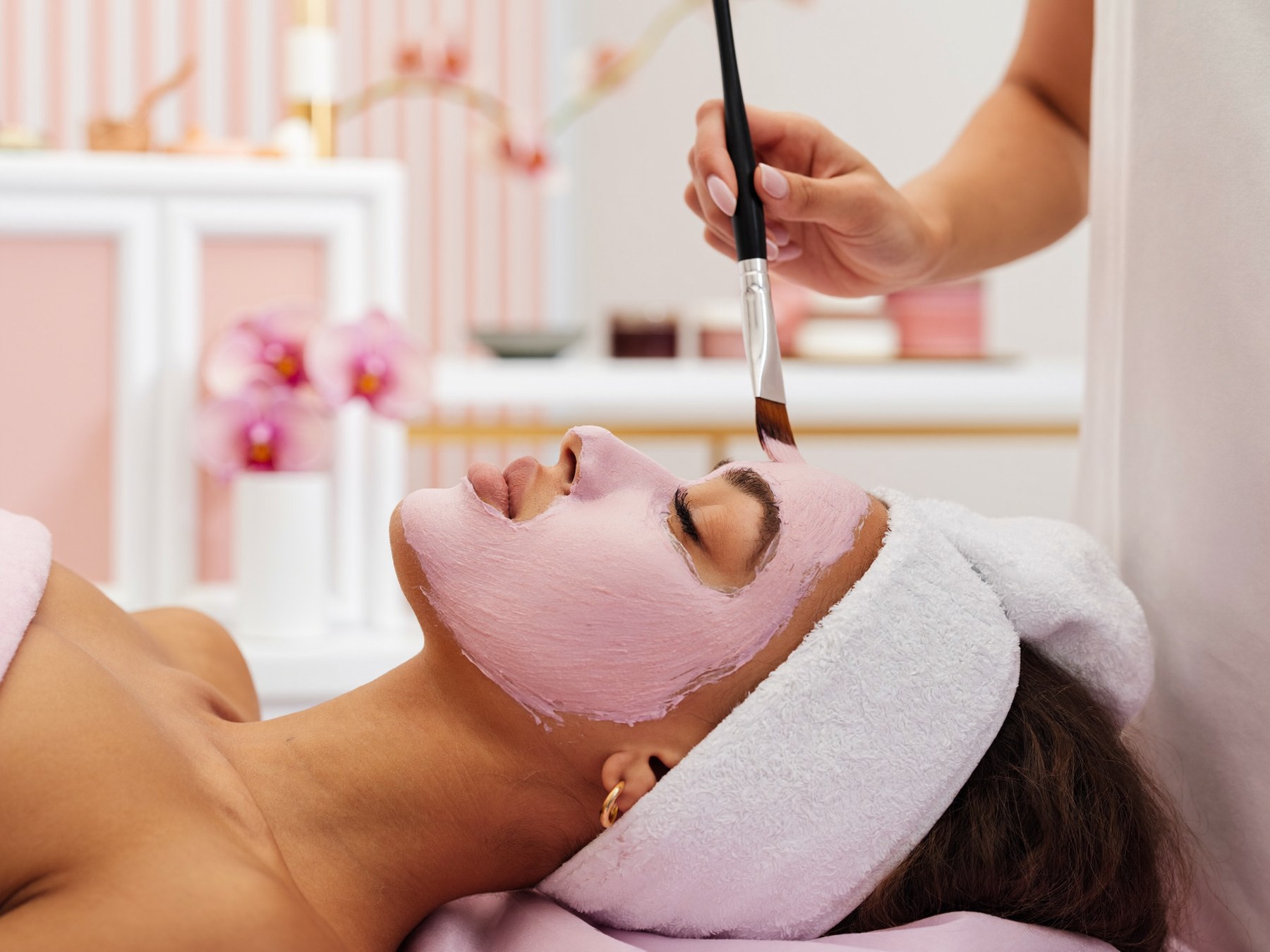
**1. Skin Consultation & Analysis** Your esthetician begins by reviewing your skin intake form and examining your skin under magnification or specialized lighting. This is where disclosing your current products, concerns, and medical history matters most. **2. Deep Cleansing** The skin is thoroughly cleansed to remove makeup, sunscreen, and surface debris — prepping it for the treatments that follow. **3. Exfoliation** Dead skin cells are removed using either mechanical exfoliation (gentle scrubbing) or chemical exfoliation (enzymes or mild acids). At a med spa, exfoliation products are often medical-grade, which is why your pre-appointment prep is so important. **4. Extractions (if needed)** Blackheads and congested pores may be manually extracted. This step is only performed when appropriate for your skin type — your esthetician will advise you. **5. Treatment Mask** A customized mask — targeting hydration, calming, brightening, or acne control — is applied and left to work while you relax. **6. Serum, Moisturizer & SPF** The treatment closes with skin-specific serums and a moisturizer, finishing with broad-spectrum SPF to protect your freshly treated skin. The entire appointment typically runs **45 to 90 minutes**, depending on the service you select. Plan your schedule with that window in mind — and do not book a facial the day before a major event. ---45–90
Minutes per session
28 Days
Skin cell turnover cycle
4–6 Weeks
Recommended frequency
What to Do (and Avoid) the Week Before Your Appointment
The week before your facial is when your choices matter most — and most first-timers do not realize that their regular skincare routine could actually interfere with treatment. Think of pre-facial preparation as protecting your investment. Clients who prep correctly experience less sensitivity, better product absorption, and visibly stronger results. Here is your week-by-week checklist: ### 5–7 Days Before: Pause Active Ingredients5–7 Days Before: Pause Active Ingredients
Stop using **retinoids and retinol** at least five to seven days before your appointment. These vitamin A derivatives accelerate cell turnover, which leaves skin more sensitized. Combining them with the exfoliation your esthetician performs can cause irritation, redness, or peeling. The same logic applies to **strong vitamin C serums, AHAs (glycolic and lactic acids), and BHAs (salicylic acid)**. If it exfoliates or accelerates cell turnover, pause it. ### 48–72 Hours Before: Avoid Waxing and Laser Treatments48–72 Hours Before: Avoid Waxing and Laser Treatments
Do not schedule waxing, threading, laser treatments, or any procedure that compromises the skin's surface barrier within 48 to 72 hours of your facial. The skin needs time to recover from those services before it can tolerate additional treatment. ### The Full Week: Hydrate and Keep It SimpleThe Full Week: Hydrate and Keep It Simple
Drink water consistently throughout the week. Hydrated skin responds better to every facial step — from exfoliation to mask absorption. Stick to your basic, gentle routine: a mild cleanser, lightweight moisturizer, and daily SPF. **Avoid sun exposure** or tanning (including self-tanner) the week before. Sunburned or actively tanned skin may be too sensitive for treatment, and your esthetician may need to modify or reschedule your service.
**⚠️ Medication Note:** If you are currently taking or have recently taken **Accutane (isotretinoin)**, you must disclose this before booking. Isotretinoin is a strict contraindication for most facial treatments, including exfoliation and extractions. Most estheticians require a waiting period of six months to one year after completing an Accutane course before performing certain services.
---
What to Tell Your Esthetician at Your Consultation
Your pre-treatment consultation is not small talk — it is the foundation of a safe, effective, and customized facial experience. At Blushvirginia, licensed estheticians use your intake information to select the right products, adjust treatment intensity, and flag any contraindications before they become problems. Be honest and thorough. Here is what to share: ### Skin Concerns and GoalsSkin Concerns and Goals
Tell your esthetician what is bothering you most — whether that is acne, hyperpigmentation, dryness, dullness, fine lines, or uneven texture. The more specific you are, the more targeted your treatment can be. A vague "I just want glowing skin" is a starting point, but "I have been dealing with hormonal breakouts on my chin for six months" gives your esthetician real clinical data to work with. ### Your Current Skincare RoutineYour Current Skincare Routine
List every product you use regularly, including any prescription topicals. Prescription-strength retinoids, topical antibiotics, or acne treatments can affect how your skin responds to facial ingredients. Your esthetician needs this information to avoid reactions. ### Allergies and SensitivitiesAllergies and Sensitivities
Disclose all known allergies — including fragrance, nut oils, latex, and specific botanical ingredients. Med spa facial products are concentrated and potent. What might be a mild reaction to a drug-store product can be more intense with medical-grade formulations. ### Recent ProceduresRecent Procedures
Share any recent cosmetic treatments: Botox, filler, chemical peels, laser resurfacing, or microneedling. These procedures create specific recovery windows, and layering a facial on top of them too soon can cause complications. --- **Real Client Scenario:** Mia booked her first facial at Blushvirginia without mentioning she had received lip filler two days prior. During the consultation, her esthetician caught this in the intake form and adjusted the facial to avoid any steam or pressure near the treatment area — protecting Mia's results and keeping her skin safe. That five-minute conversation changed the entire plan for the better. --- Explore Blushvirginia's Facial Services → ---How to Care for Your Skin Immediately After Your Facial
The 24 to 48 hours after your facial are just as important as the preparation that came before it — what you do (and skip) in this window determines how long your results last. ### The First 24 Hours: Keep It GentleThe First 24 Hours: Keep It Gentle
**Skip the makeup.** Your pores are clean and your skin is freshly treated. Applying foundation or concealer too soon can clog pores and undo the work your esthetician just did. Give your skin at least 24 hours to breathe — longer if your treatment included extractions. **Skip the gym.** Intense exercise raises your body temperature and causes sweating, which can irritate freshly treated skin and introduce bacteria to open pores. Wait at least 24 hours before returning to high-intensity workouts. **Use gentle, fragrance-free cleansers only.** Your skin's barrier has been worked on. Harsh cleansers, toners with alcohol, or any active ingredients can cause stinging, redness, or breakouts in this window. ### SPF Is Non-NegotiableSPF Is Non-Negotiable
Freshly exfoliated skin is more vulnerable to UV damage than untreated skin. Apply a broad-spectrum **SPF 30 or higher** every morning — without exception — for at least one week after your facial. This is not optional. Skipping sunscreen after a facial can cause hyperpigmentation, especially on darker skin tones or post-acne skin. ### What "Purging" Looks Like — and Why It HappensWhat "Purging" Looks Like — and Why It Happens
Some clients notice a small breakout or increased blemishes in the days following their first facial. This is called skin purging — the accelerated movement of congestion already beneath the skin's surface to the top, triggered by the deep cleansing and exfoliation process. Post-facial redness typically subsides within **2 to 24 hours** depending on treatment intensity. Purging, if it occurs, usually resolves within one to two weeks. It is a sign the treatment worked — not that something went wrong. --- **Real Client Scenario:** James came into Blushvirginia for his first facial and was alarmed to see a few small pimples appear three days later. He called the spa, and his esthetician explained that this was a normal purging response — his skin was clearing congestion that had been trapped below the surface for months. By his second facial four weeks later, his skin was visibly clearer and more balanced than it had been in years. ---How Often Should You Get a Professional Facial?
The general recommendation from licensed estheticians and dermatologists is every **4 to 6 weeks** — and the science behind it is straightforward. Your skin's natural cell turnover cycle is approximately **28 days**. This is how long it takes for new skin cells to form deep in the dermis and travel to the surface. As you age, this cycle slows — which is why skin can look duller and less radiant over time. A consistent facial schedule keeps that process moving efficiently, clears accumulating congestion, and ensures your skin is responding to the right treatments at the right stages. ### Building a Facial Routine That Works for Your SkinBuilding a Facial Routine That Works for Your Skin
Your ideal facial frequency depends on your skin type and goals: - **Acne-prone skin:** May benefit from more frequent treatments (every 3–4 weeks) during active breakout phases - **Aging concerns / hyperpigmentation:** Every 4–6 weeks supports consistent brightening and collagen stimulation - **Maintenance / healthy skin:** Every 6 weeks is typically sufficient to sustain results and prevent congestion At Blushvirginia, your esthetician will recommend a personalized treatment cadence after your first appointment — so you are never guessing how often to come back. ### What to Try Next: Upgrading Your Facial ExperienceWhat to Try Next: Upgrading Your Facial Experience
Once you have experienced your first custom facial, you may be ready to explore more targeted treatments. **HydraFacial** technology combines deep cleansing, extraction, and hydration in a single treatment — ideal for clients dealing with congestion, dehydration, or dullness. **Medical-grade chemical peels** can address hyperpigmentation and texture concerns at a deeper level than a standard facial. [Explore Blushvirginia's full facial and treatment menu](https://blushvirginia.com) to find the service that matches your skin goals. Book Your Facial Consultation Today → --- ## Frequently Asked Questions About Professional FacialsFrequently Asked Questions About Professional Facials
**Q: What should I avoid before getting a facial?** A: Avoid retinoids and retinol for 5–7 days before your appointment. Skip waxing, threading, laser treatments, and harsh exfoliants for at least 48–72 hours before. Do not use self-tanner or expose your skin to significant sun within a week of your appointment. **Q: Should I wash my face before a professional facial?** A: You do not need to do anything special the morning of your appointment. Arrive with a clean face and no heavy makeup if possible — but your esthetician will thoroughly cleanse your skin as the first step of the facial. A light rinse in the morning is fine. **Q: How long does a professional facial take?** A: Most professional facials take between **45 and 90 minutes**, depending on the treatment selected. At Blushvirginia, your esthetician will confirm the duration when you book so you can plan accordingly. **Q: What should I tell my esthetician before my first facial?** A: Share your skin concerns, current skincare products, known allergies, any recent cosmetic procedures, and all medications — especially Accutane/isotretinoin, which is a contraindication for most facial treatments. The more information you provide, the more personalized your treatment can be. **Q: How often should you get a professional facial?** A: Most skin experts recommend a professional facial every **4–6 weeks**, aligned with the skin's natural 28-day cell turnover cycle. Your esthetician at Blushvirginia will recommend a customized schedule based on your skin type and goals. **Q: Is it normal for skin to break out after a facial?** A: Yes. Some clients experience a temporary breakout known as skin purging in the days following their first facial. This happens because the treatment brings congestion from beneath the skin's surface to the top. It typically resolves within one to two weeks and is a sign the treatment worked effectively. **Q: Can I wear makeup to my facial appointment?** A: You can arrive wearing makeup — your esthetician will cleanse it off as the first step. However, arriving with a clean face allows your esthetician to spend more time on treatment and skin analysis rather than makeup removal. **Q: What makes a med spa facial different from a day spa facial?** A: At a med spa like Blushvirginia, facials are performed by licensed estheticians using medical-grade products and technology, under the oversight of a medical director. The level of skin analysis, product potency, and treatment customization is significantly higher than what you will find at a standard day spa. --- ## About Blushvirginia Beauty Med SpaAbout Blushvirginia Beauty Med Spa
**Business Name:** Blushvirginia Beauty Med Spa
**Website:** [blushvirginia.com](https://blushvirginia.com)
**Services:** Custom Facials, HydraFacial, Medical-Grade Chemical Peels, Skin Consultations, Injectables, Body Treatments, and more
**Credentials:** Licensed estheticians certified through the Virginia Board of Cosmetology; advanced treatments performed under medical director oversight in compliance with Virginia state regulations
**About:** Blushvirginia is a results-driven beauty med spa committed to combining clinical expertise with a warm, personalized client experience. Whether you are booking your first facial or building a long-term skin health routine, Blushvirginia's licensed professionals are here to guide every step.
Blushvirginia's estheticians are licensed through the **Virginia Board of Cosmetology**, which requires completion of a state-approved esthetics program before any professional can perform services. Advanced and medical-grade treatments at Blushvirginia are performed under physician or medical director supervision — a clinical layer of oversight that standard day spas do not provide.
When you are ready to experience the difference a med spa facial can make, [visit Blushvirginia online](https://blushvirginia.com) to explore services and book your first appointment.
Book Your Appointment at Blushvirginia →